
Off-lake pickup in Woods Cross, Utah
Lake Powell Jet Ski Rentals
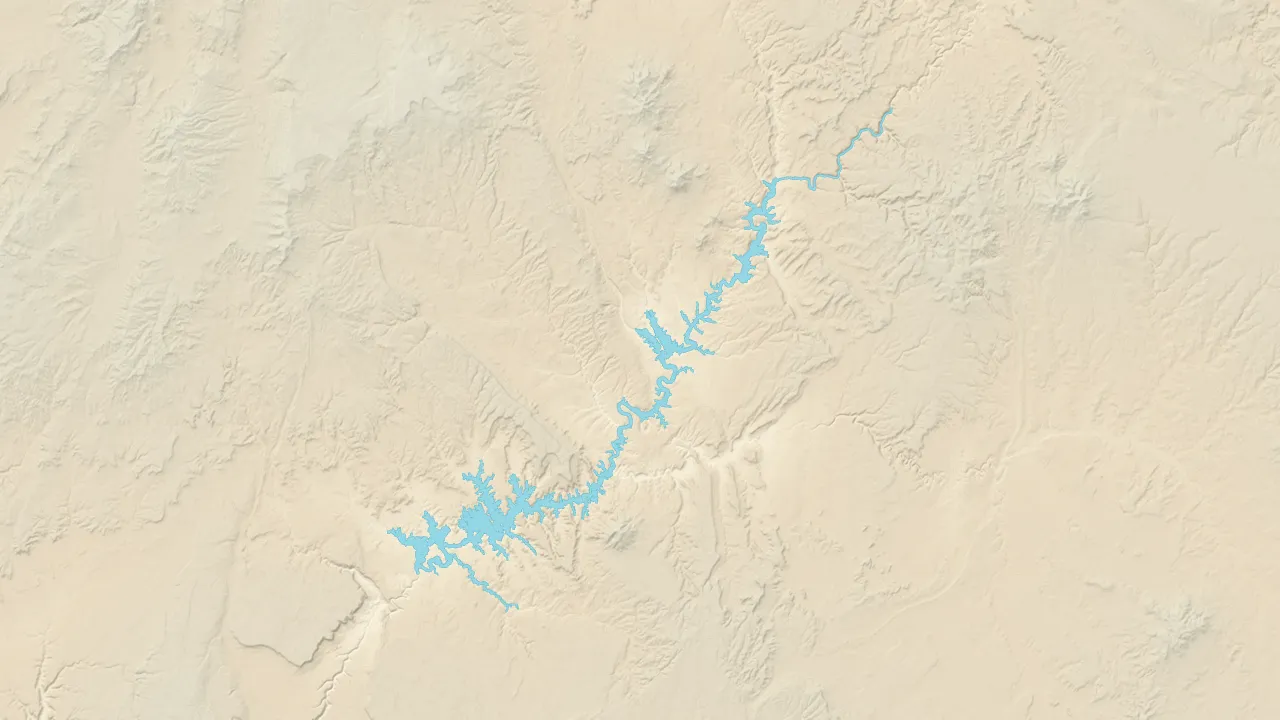
Lake Powell is the most scenic jet-ski water in the country: 186 miles of red-rock canyon at full pool (NPS). The water is low (3,534.50 feet on November 3, 2026, about 165 feet below full), with only a few launches open to motorized boats, so plan a multi-day trip and check NPS ramp status before you tow.
Updated
At a glance
- Sea-Doo jet skis from $235 a day, before taxes and fees; a full day is up to 12 hours, 8 AM to 8 PM.
- Pickup at 901 S. 1800 W, Woods Cross, UT, about 4 hr 55 min to Bullfrog (307 miles).
- Trailer included for pickup; your vehicle needs a 2-inch hitch and flat 4-prong lights.
- 18+ to rent and drive.
- We don't deliver to Lake Powell.
- Multi-day discounts on the jet skis start on rentals of 3 or more days, and you can hold a multi-day rental with a 50% deposit (the balance is processed 2 days before pickup). See pricing.
Best launch window: April–May and September–October for the calmest canyon conditions; midsummer for the warmest water but the most wind
Wind & water: Highly variable: the canyons funnel and accelerate wind unpredictably. Mornings are usually calmest in any season, and spring and fall often hold glass most of the day.
Quagga waters: decon required before you return
Live Lake Powell conditions
Lake level from USGS; wind and forecast from the National Weather Service. Check the official ramp status and reservoir level (linked below) before you head out.
Lake Powell is the headliner. At full pool it’s 186 miles of red-rock canyon water on the Utah–Arizona line, with side canyons that wander for miles and open reaches where the scenery does most of the work. There is nothing else like it in the country, and for a lot of riders it’s the bucket-list trip. It’s also the most demanding water we send anyone to, and with the water this low, the most worth planning carefully.
Low water: plan around it
Powell is running far below full. At the end of September 2026 it held about 22 percent of its live capacity, at about 3,518 feet, and by November 3 it had come up to 3,534.50 feet. Reclamation’s October 2026 study (opens in a new tab) projects it ending the 2027 water year (September 2027) near 3,525 to 3,541 feet on most probable inflows, and anywhere from about 3,497 to 3,606 feet if the year runs very dry or very wet. In practical terms, most of the launch ramps are closed to motorized boats: in the November 2026 NPS table only Wahweap Stateline Auxiliary and Bullfrog North (at your own risk) took them, the Bullfrog Primitive launch opens only if the water falls below about 3,525 feet, the Bullfrog marina was moored near Halls Crossing (which has no public ramp) in September, and the exposed shorelines hide submerged rock and shifting channels. None of that makes Powell off-limits; it just makes it a lake you check on before you commit a two-day drive to it.
So before you tow, pull up the NPS launch ramp page (it’s linked in the live-conditions section on this page) and confirm which ramps are open and what the launch situation looks like that week.
Two marinas: start with Wahweap
We don’t deliver to Lake Powell, so you tow the Sea-Doos down yourself and launch from one end of the lake. We send people to Wahweap first whenever its launch is open, and Bullfrog is the shorter drive and the backup.
Wahweap Marina (Page, AZ): our first pick
Wahweap is about 393 miles from our Woods Cross pickup, a little over six hours. It’s a full-service marina (fuel, repairs and dry storage, per NPS).
- Where to launch: the Stateline Auxiliary Ramp. In the November 2026 NPS table it was the only public ramp at the south end listed open to motorized boats; the Wahweap Main and Stateline ramps and the Antelope Point public ramp were paddlecraft only.
- How it works: get the machines ready in the Stateline Main Ramp parking lot first, then drive halfway down the Stateline ramp to reach the auxiliary ramp.
- Watch the level: NPS lists the auxiliary ramp’s minimum safe level as 3,515 feet and notes plate mats are needed at 3,524 feet. If the NPS ramp table (opens in a new tab) shows it closed, launch at Bullfrog instead.
- Fuel: there are fuel docks at Wahweap and at Stateline (check their hours before you count on them).
- Clocks: Wahweap runs on Arizona time all year, so in summer it’s an hour behind Utah. Plan your launch and your drive home around that.
Bullfrog Marina (Utah): the shorter tow
Bullfrog is about 307 miles from Woods Cross, just under five hours, and it puts you on the north end of the lake.
- Where to launch: it depends on the level. At about 3,525 feet and up, Bullfrog North, which NPS lists as launch at your own risk and open to all vessels. Below that, the Bullfrog Primitive Launch Ramp, which NPS says is only usable when the water is under about 3,525 feet: 20 feet wide, hard-packed dirt with steel plates. The NPS ramp table (opens in a new tab) shows which is in use.
- The marina has moved, for now: as of September 2026 (NPS), the Bullfrog marina, fuel dock and pump-out were moored in deeper water near Halls Crossing, across the lake, and the land-based services at Bullfrog stayed open.
- No shortcut across: as of November 2026, Halls Crossing had no public launch ramp and the Bullfrog to Halls Crossing ferry wasn’t running (NPS).
Either way
- Park fees: in 2026, Glen Canyon charged $30 per vehicle for the week, plus a vessel pass for each machine: $20 per Sea-Doo for 1 to 7 days, or $40 for the calendar year (check the NPS fees page (opens in a new tab) for 2027 rates). The park doesn’t take cash, so bring a card.
- Life jackets: NPS requires everyone on a personal watercraft at Powell to wear one, at any age.
- Check before you tow: ramps open and close as the lake moves, so pull up the NPS launch ramp table (linked in the live-conditions section on this page) the week of your trip.
The quagga rules are mandatory here
Powell is the only Utah water with confirmed quagga mussels, and that changes your checklist. Utah law says a boat leaving Powell needs a professional decontamination or the required dry time before it can launch anywhere else in the state. For our machines it’s the decontamination, every time: if you take our machines to Powell, you bring them back inspected and professionally decontaminated, with the inspection and decontamination paperwork for each machine. It’s not optional and it’s not a formality.
On your way out:
- Clean and drain first. NPS asks PWC riders to clean the hull, intake grate and steering nozzle and run the engine 5 to 10 seconds to blow water out of the drive before leaving the ramp. Pull the drain plugs right on the ramp and leave them out.
- Stop for the exit inspection, and plan your exit around it. Our rule needs the inspection and decontamination paperwork for each machine, so pull out while the station is staffed (DWR technicians work the ramps most daylight hours). If you still find it closed, Utah law says to clean and drain the machines before you leave the ramp and tow with every drain plug out, and you’ll need an authorized station’s decontamination paperwork before you bring them back (see below).
- Ask for the decontamination right there. Tell the Utah DWR technicians on the ramp you need the machines decontaminated. DWR does it for free at its Lake Powell stations, on request, as staffing and boat traffic allow. DWR also says it can’t decontaminate every boat that leaves, and weekend lines can run more than an hour, so give yourself the time. DWR lists hot-water dip tanks at the Stateline launch ramp at Wahweap and at Bullfrog (July 2026), and a dip tank takes two people: one with the machine and one driving the tow vehicle. Check DWR’s station map (opens in a new tab) for current hours.
- Keep the seals and the receipt. After the inspection, the technicians put seals on the machine and trailer and hand you a receipt of inspection and decontamination. Leave the seals on and bring the receipt back to us with the machines.
- If DWR can’t decontaminate them there, or the station was closed, get the exit inspection if it’s open (seals and receipt), then book an authorized decontamination station from DWR’s map before you bring the machines back. Some charge a fee, so ask when you book. Bring us that station’s paperwork along with any inspection receipt.
- On Powell from Wahweap for six or more days in a row? Arizona’s rule for long stays applies on top of ours. Arizona Game and Fish says a boat that’s been on infested water like Powell for six or more consecutive days has to be decontaminated by the department or one of its authorized agents before it’s towed, and then dried for 7 consecutive days (May through October) or 18 (November through April) before it launches anywhere else or is taken to another state. Meeting that rule is on you as the renter, so plan your trip length around it. The department offers free inspections and decontaminations on request; set one up with Arizona Game and Fish (opens in a new tab) before you head out.
We walk you through exactly what’s expected at pickup, and Utah’s statewide rules are on our rider resources page.
Make it a real trip
This is a five- to six-hour haul each way, depending on which marina you launch from, so nobody does Powell as a day run. The riders who love it treat it as a multi-day expedition: a basecamp near an open marina, two or three full days on the water, fuel and range planned out because the distances between services are real, and time on the last day for the decontamination line on your way out. Day and multi-day rentals are built for exactly this: grab the Sea-Doos from us, tow down, and they’re yours for the whole stretch.
Powell takes commitment, and with the water this low it takes a little homework too. Do both, get out on the canyons early each morning, and it pays you back like no other lake on our list. When your dates are set, we’ll have your Sea-Doos prepped and waiting in Woods Cross.
Launch ramps
Before you launch: from January 1, 2027, Utah requires an annual boating safety course for every driver, visitors from out of state included. Bring proof or we'll brief you at pickup, and every machine goes out clean, drained, and AIS-compliant.
- Wahweap Stateline Auxiliary: Our first pick when it's open. Page, AZ side; open to motorized boats (NPS, November 2026). Its minimum safe level is 3,515 ft, and NPS notes plate mats are needed at 3,524 ft.
- Bullfrog North: Launch at your own risk, open to all vessels (NPS, November 2026), with a minimum safe level of 3,525 ft.
- Bullfrog Primitive: The fallback when the lake drops: NPS says it's only usable when the water is below about 3,525 ft, so it was closed at the November 2026 level. 20 ft wide, hard-packed dirt with steel plates.
- Halls Crossing: Closed to all vessels (NPS, November 2026). The relocated Bullfrog marina was moored nearby in September 2026, but there's no public ramp.
Lake Powell jet ski rental FAQ
Is Lake Powell worth the long drive?
For scenery, nothing in the lower 48 compares. It's a long haul each way, though (a little over six hours to Wahweap in Page, AZ, or just under five to Bullfrog Marina), so it only makes sense as a multi-day trip with at least two full days on the water.
Do you deliver to Lake Powell?
No. Powell is a tow-it-yourself trip: pick the Sea-Doos up in Woods Cross and launch at Wahweap or Bullfrog.
Which marina should I launch from?
Wahweap, when its Stateline Auxiliary Ramp is open to motorized boats. If it isn't, go to Bullfrog: Bullfrog North (at your own risk) when the water's at about 3,525 feet or higher, and the Bullfrog Primitive ramp when it's below that. Check the NPS launch ramp page the week you go.
What are the AIS rules at Powell?
Powell is the only Utah water with confirmed quagga mussels. When you leave, stop for the exit inspection whenever the station is open and pull every drain plug before you tow. Under Utah law, before a boat from Powell can launch anywhere else in the state, it needs a professional decontamination or the required dry time: 7 days in summer, 18 days in fall and spring, or 30 days in winter (always 30 days for wakeboard boats unless professionally decontaminated). Our machines need the decontamination, not the dry time: if you take our machines to Powell, you bring them back inspected and professionally decontaminated, with the inspection and decontamination paperwork for each machine, so plan to pull out while the inspection station is staffed. On Powell from Wahweap for six or more days in a row? Arizona's long-stay rule adds a decontamination by Arizona Game and Fish or an authorized agent, then a dry time before the machines can launch elsewhere or leave the state, and meeting it is on you; see the quagga section on this page. Utah's full rules are at stdofthesea.utah.gov.
Do the machines need to be decontaminated before I bring them back?
Yes. If you take our machines to Powell, you bring them back inspected and professionally decontaminated, with the inspection and decontamination paperwork for each machine. Plan to pull out while the inspection station is staffed (DWR technicians work the ramps most daylight hours). Stop for the exit inspection and ask the Utah DWR technicians on the ramp to decontaminate the machines. DWR does it for free at its Lake Powell stations, on request, as staffing and boat traffic allow, and weekend lines can run more than an hour. The technicians put seals on the machine and trailer and give you a receipt: leave the seals on and bring us the receipt. If DWR can't decontaminate the machines there, or you find the station closed, get them decontaminated at an authorized station from DWR's map before you bring them back (some charge a fee), and bring us that station's paperwork too.
Is the water low at Lake Powell?
Yes. It stood at 3,534.50 feet on November 3, 2026, about 165 feet below full pool, after about 3,518 feet at the end of September. Reclamation's October 2026 study projects roughly 3,525 to 3,541 feet by the end of the 2027 water year on most probable inflows, and a dry year would take it lower. That means fewer open ramps, exposed shorelines, submerged obstacles, and shifting channels. Treat navigation conservatively and check the NPS launch ramp page before you go.
Best time of year for an easier trip?
Late September. The water's still warm, the wind eases, and the summer crowds are gone.
Do you rent waverunners?
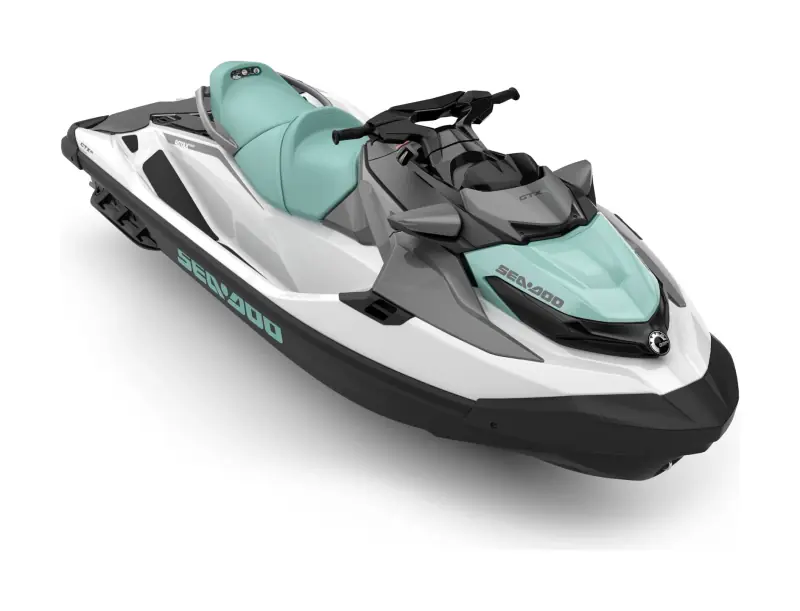
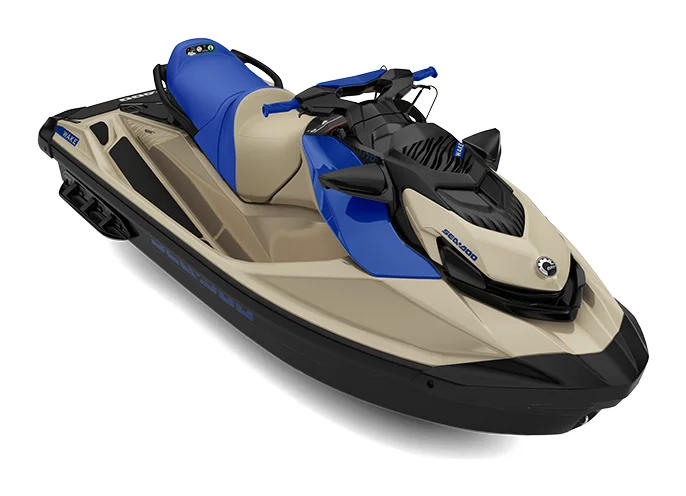
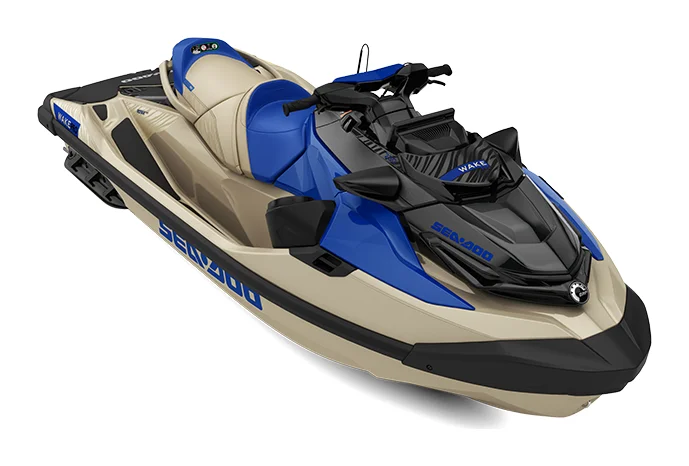
Our personal watercraft are Sea-Doos, the same sit-down, three-rider machines people call jet skis or waverunners. Compare our three models on our fleet page.